Blog
Email marketing notes.
Email Marketing
Automated Email Sequences Every Ecommerce Store Should Build
Learn which ecommerce automated email sequences matter most, what each flow should do, and how to prioritize them.
By Peak Meadow Published July 10, 2026
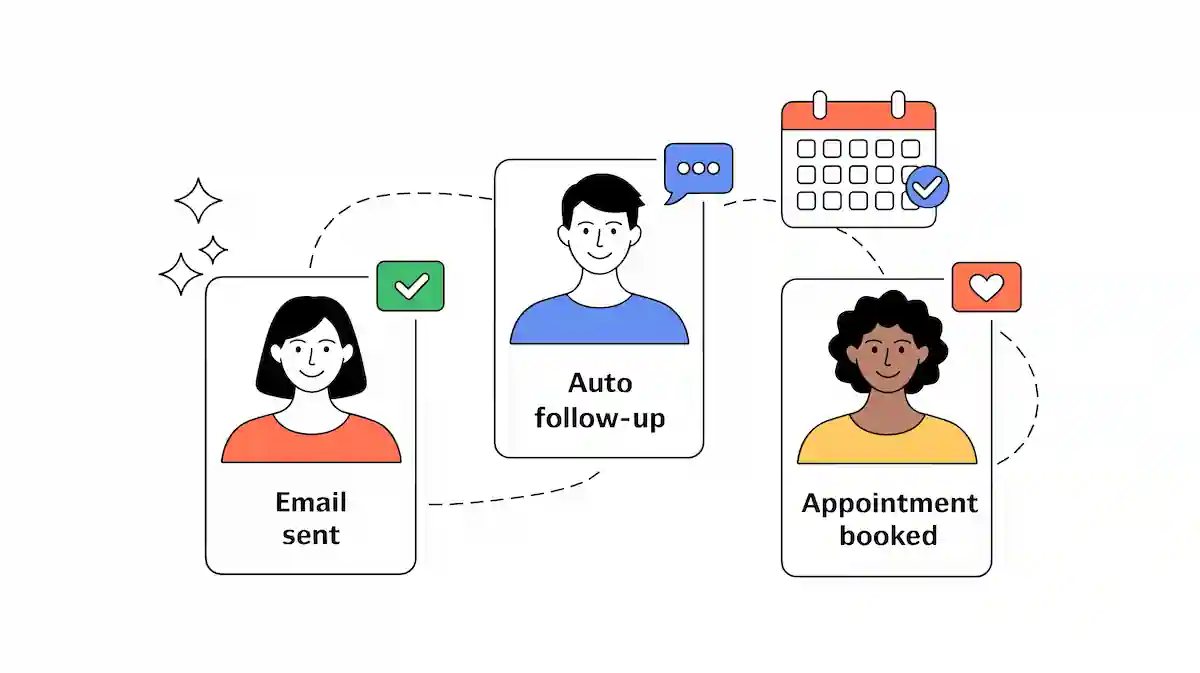
A good ecommerce email program is not built from random sends.
It is built from sequences that match the customer journey. A new subscriber needs one kind of follow-up. A cart abandoner needs another. A first-time buyer needs something different again.
That is what automated email sequences are for. They turn common customer moments into repeatable flows, so every shopper gets a relevant message without your team rebuilding the same email every week.
The leverage can be surprisingly large. In Omnisend’s analysis of roughly 24 billion marketing emails sent in 2024, automated messages accounted for just 2% of email volume but 37% of email-driven sales. That does not mean every automation prints money. It means a well-timed email, sent because of something a shopper actually did, can carry far more weight than another general promotion.
What an automated email sequence is
An automated email sequence is a set of emails that sends after a customer meets a condition.
The condition might be joining the list, viewing a product, adding something to cart, starting checkout, buying for the first time, buying a specific product, becoming inactive, or waiting for an out-of-stock product.
The sequence usually includes delays and rules. One email may send immediately. Another may wait a day. Another may only send if the customer has not purchased, clicked, or replied.
That is what makes it different from a one-time campaign. A campaign is sent on the brand’s schedule. A sequence is entered on the customer’s schedule.
Start with a customer’s moment
You might be thinking you can copy all your flows from another brand, but that’s how bloat happens. Most of the time, you won’t need all flows as someone else.
Stop and think about when the customer needs help with a decision or what would make the purchase an easier choice for them. Then, you’ll be able figure out when a flow is necessary.
A new subscriber needs trust whereas a consumer that is just browsing needs clarity. A cart abandoner might need to get a little nudge forward. A first-time buyer needs confidence. A repeat customer needs relevance. A lapsed customer needs a reason to return.
The sequence gets easier to write once you understand the scenario.
The welcome sequence
The welcome sequence starts when someone joins your email list.
This is one of the most important flows because new subscribers usually have high intent. They just gave you permission to email them. Some are waiting for an incentive. Some are researching. Some are close to a first order but still need trust.
A simple welcome sequence can look like this:
| Timing | Job | |
|---|---|---|
| 1 | Immediately | Deliver the signup promise and explain where to start |
| 2 | 1 day later | Tell the brand story, show best sellers, or reduce risk |
| 3 | 2-3 days later | Handle objections, show proof, or guide the first purchase |
| 4 | 4-7 days later | Final reminder, preference capture, or softer content |
The welcome flow should not be only a coupon countdown. If the subscriber came for a discount, deliver it clearly. Then use the rest of the sequence to explain why the product is worth buying.
The abandoned cart or checkout sequence
The abandoned cart sequence starts when a shopper adds a product to cart or begins checkout but does not buy.
This is usually one of the highest-intent automations in ecommerce. The customer was close. Something stopped them.
And this is not a small edge case. Baymard Institute’s running average across 50 studies puts cart abandonment at 70.22%. Imagine if you were able to capture only 20% of those sales. Now, some of those people were only browsing, but others hit a shipping surprise, got distracted, or wanted one last bit of reassurance. The sequence should help you learn which problem you are dealing with, not simply repeat “you forgot something” three times.
A simple cart sequence can include:
| Timing | Job | |
|---|---|---|
| 1 | 1-2 hours later | Remind them what they left and make return easy |
| 2 | 18-24 hours later | Address objections with reviews, shipping, returns, sizing, or support |
| 3 | 2-3 days later | Add urgency, a modest incentive, or a final reason to finish |
These numbers are just estimates. The exact timing depends on product type and buying cycle. A low-cost replenishable product may need a faster flow. A higher-consideration product may need more education and less pressure.
The most important rule is simple: if the customer buys, remove them from the cart sequence.
Casper offers a useful real-world model. Its well-known cart email uses the line “Come back to bed,” returns the shopper directly to checkout, and includes customer reviews. The personality gets attention, but the review is doing practical work for a buyer who may still be unsure about ordering a mattress online. Shopify’s breakdown of the email is a good reminder that brand voice and objection handling can live in the same message.
The browse abandonment sequence
Browse abandonment starts when a known subscriber views a product or category but does not add to cart.
This is a lighter-intent moment than cart abandonment. The customer looked, but they did not commit. That means the email should feel helpful. Don’t go in their mailbox trying to make the sale right away.
A browse flow can remind them of the product, show related items, answer common questions, or highlight reviews. A discount isn’t always the right answer. Many browsers are still deciding what they want. A discount would be of no use for these shoppers.
A useful structure is:
- Email 1: “Still considering this?” with the viewed product or category.
- Email 2: educational content, comparison help, reviews, or best sellers.
- Email 3: a gentle nudge only if the product and margin support it.
Use frequency caps here. A frequent browser should not receive a new browse email every time they look at something.
The post-purchase sequence

The post-purchase sequence starts after a customer buys.
This flow is often underused because brands focus so much on the first sale. But the period after purchase is where you reduce buyer’s remorse, set expectations, increase product satisfaction, and prepare the second order. It’s a lot easier (and cheaper) to make a sale to someone you’ve already sold to.
Think about the first email a nervous customer actually wants. Someone who just bought a complicated coffee brewer probably needs a two-minute setup guide more than a row of matching mugs. Someone waiting for skincare wants to know when to use it, what not to combine it with, and how long results normally take. Useful post-purchase email feels more like good store staff following up than a marketer rushing toward the next order.
A strong post-purchase flow can include:
| Timing | Job | |
|---|---|---|
| 1 | After purchase or fulfillment | Thank them, set expectations, and explain what happens next |
| 2 | Before or after delivery | Teach product use, care, sizing, setup, or best results |
| 3 | After enough usage time | Ask for a review or feedback |
| 4 | Based on product timing | Recommend a cross-sell, replenishment, or next purchase |
Be careful with transactional and marketing boundaries. Order confirmations and shipping updates have a different job from promotional follow-up.
The cross-sell or replenishment sequence
A cross-sell sequence recommends a related product after purchase. A replenishment sequence reminds the customer to reorder when the original product is likely running low.
These flows work best when they are based on actual product logic.
If someone buys running shoes, the next best purchase might be socks, insoles, or apparel. If someone buys a 30-day supplement supply, the reminder should arrive before they run out. If someone buys a gift item, the next message might focus on gifting occasions rather than personal use.
Resist the temptation to default to a generic 30/60/90-day replenishment schedule. Marketers who run these flows day to day often pull actual purchase-interval data from the store platform first and build timing around the median repurchase window for each product category, sometimes even each SKU, rather than a one-size-fits-all cadence. A generic schedule means some emails land while the customer still has two months of product left, and others land after they already reordered elsewhere.
Bad cross-sell automation feels like random upselling. Good cross-sell automation feels like useful timing.
The winback sequence
The winback sequence targets inactive customers or subscribers.
The trigger might be no purchase in 90, 120, or 180 days. It might be no opens or clicks for a long period. The right timing depends on your product’s natural buying cycle.
A winback flow can show what is new, remind customers why they bought before, offer a preference update, or make a final incentive. If someone still does not engage, it may be better to suppress them than keep emailing forever.
Treat winback and sunset as two separate jobs rather than one long flow. Winback tries to re-engage a lapsed customer with relevance and incentive. Sunset comes afterwards, for contacts who still don’t respond, and gives them one clear “do you still want to hear from us?” moment before they’re removed from active sends. Skipping that second step is a common reason list engagement and deliverability quietly erode over time.
A smaller engaged list is most likely healthier than a large list full of silent subscribers.
The back-in-stock sequence
Back-in-stock automation starts when a shopper asks to be notified about an unavailable product.
This is valuable because intent is already proven. The customer raised their hand. When inventory returns, the email should be direct. The product is back and here is the link. Don’t go overboard with this flow.
For high-demand items, add urgency only when it is real. False scarcity will weaken trust fast.
How to prioritize your sequences
Do not build every possible flow at once.
Start with the flows closest to revenue and customer experience. Here’s a few flows you can choose from:
- Welcome sequence.
- Abandoned cart or checkout sequence.
- Post-purchase sequence.
- Browse abandonment sequence.
- Replenishment or cross-sell sequence.
- Winback sequence.
- Back-in-stock or loyalty sequence.
That order works for many stores, but not all. A consumables brand may prioritize replenishment sooner. A high-AOV brand may need more browse education. A store with frequent inventory sellouts may need back-in-stock alerts earlier.
This order also matches the broader performance data. Resist turning the list into a 90-day construction project before anything goes live. A plain, accurate cart reminder this week is more useful than an elaborate ten-branch flow that is still sitting in draft next quarter. Launch the core path, watch what customers do, and improve it from real behavior.
Keep each sequence focused
Every sequence should answer one question.
Welcome: why should I buy from you?
Cart recovery: what is stopping me from finishing?
Browse abandonment: is this product right for me?
Post-purchase: how do I feel good about what I bought?
Replenishment: is it time to buy again?
Winback: why should I come back now?
When a flow tries to do too much, it becomes noisy. Keep the trigger, timing, message, and exit rules tied to the customer moment that started it.
The bottom line
Automated email sequences work because ecommerce behavior is predictable. People subscribe, browse, hesitate, buy, need help, buy again, or go quiet.
Your job is to build the flows that meet those moments with useful messages.
Start with the sequences that protect the most revenue and improve the customer experience fastest. Then add complexity only when the customer journey gives you a reason.