Blog
Email marketing notes.
Email Marketing
The Customer Journey in Ecommerce Email Marketing
Map ecommerce lifecycle emails to each customer journey stage, from welcome emails and cart recovery to retention flows.
By Peak Meadow Published July 8, 2026
A shopper in a different stage needs a different email. That is the whole point of ecommerce customer journey email marketing.
The welcome email that works for a new subscriber will not work for someone who abandoned a cart. The reorder reminder that works for a repeat buyer will not make sense for someone who just found your brand. Good lifecycle email marketing lines up the message with the customer’s mindset.
That makes emails feel helpful instead of random. It also makes your email program easier to plan, track, and improve because every message has a clear job.
| Journey stage | Customer mindset | Email to send | Goal | Example |
|---|---|---|---|---|
| Awareness | Who is this brand? | Welcome email | Build trust | Best sellers + brand promise |
| Consideration | Is this right for me? | Product education | Remove doubt | Sizing guide, comparison email |
| Decision | Should I buy now? | Cart/browse email | Convert | Reviews, shipping info, incentive |
| Post-purchase | Did I make a good choice? | Thank-you/setup email | Reduce regret | Care guide, usage tips |
| Retention | Should I buy again? | Reorder/win-back email | Increase LTV | Replenishment reminder |
Why stage-based email works
Most ecommerce brands send emails based on what they want to promote. Stage-based email starts with a better question: what does this customer need next?
That shift matters. In the awareness stage, a subscriber is not ready for a hard sell. They need to understand your brand, your products, and why you are worth paying attention to. In the consideration stage, they need proof, education, and comparison points. In the decision stage, they need the last bit of friction removed before buying.
The same thing happens after the purchase. Customers may need setup help, care instructions, delivery guidance, review timing, or a reason to buy again. When emails follow the customer journey, they support the buying process instead of interrupting it.
Awareness stage
The awareness stage is where a potential customer first finds your brand. Their mindset is usually simple: “Who are you, and why should I care?”
The best email for this stage is a welcome email or welcome series. This is your chance to explain what you sell, why it matters, and what makes your products different. The goal is not to push every offer at once. The goal is to make the first impression clear and useful.
A strong welcome email can point new subscribers toward your best sellers, explain your brand promise, show customer reviews, and set expectations for what kind of emails they will receive. If you promised a discount, deliver it. If you promised early access, explain how that works.
A basic awareness-stage email should do four things:
-
Introduce your brand.
-
Reinforce the main benefit of your products.
-
Showcase best sellers or top categories.
-
Give readers one clear next step.
Do not overload new subscribers with too many choices. A welcome email with five offers, eight links, and three separate calls to action creates more confusion than trust. Keep it simple. Build familiarity first. Urgency can come later.
Consideration stage
The consideration stage starts when a shopper is interested but not sold yet. Their mindset changes to: “Is this the right product for me?”
This is where product education does the heavy lifting. These emails should answer the questions that stop people from buying. For apparel, that might mean sizing, fit, materials, or return policy. For skincare, it might mean ingredients, routine order, skin type, or how long results take. For furniture, it might mean dimensions, assembly, shipping, and durability.
The more complex the product is, the more important this stage becomes. A 12 dollar
impulse buy might not need much education. A 180 dollar skincare bundle, a 400 dollar chair, or a subscription product usually does.
Good consideration-stage emails include:
-
Product comparison guides
-
Sizing or fit guides
-
Ingredient or material breakdowns
-
Customer reviews and use cases
-
Answers to common objections
This is also where segmentation helps. Someone browsing running shoes should not get the same message as someone browsing leather wallets. The email should match what they looked at, clicked, or showed interest in. That is what makes customer journey email marketing feel personal without forcing it.
Decision Stage
The decision stage is where the shopper is close to buying. Their mindset is: “Should I buy now?”
This is one of the highest-value stages in ecommerce lifecycle email marketing because the customer has already shown intent. They may have viewed a product, added something to cart, or started checkout. Something still stopped them. It could be shipping cost, timing, price, sizing doubts, distractions, or comparison shopping.
Cart recovery and browse abandonment emails work well here because they bring the product back into focus. The message should be direct. Show the item. Remind them why it matters. Address common friction points like shipping, returns, reviews, sizing, delivery speed, or guarantees.
A discount can help, but it should not be the first move every time. If you offer a coupon too early, you can train customers to abandon carts on purpose. Start with clarity first. Use an incentive later if your margins allow it.
Decision-stage emails may include:
-
Abandoned cart reminders
-
Browse abandonment emails
-
Reviews and testimonials
-
Shipping and delivery reassurances
-
Limited-time offers when appropriate
Timing matters. A cart reminder within the first hour can work because the product is still fresh in the customer’s mind. A second reminder around 24 hours later can add proof or answer objections. A later message can include a stronger reason to return if it makes financial sense.
Post-purchase stage
The sale is not the end of the customer journey. It is the start of the next one.
Right after someone buys, they may still wonder if they made the right decision. Post-purchase emails help reduce that doubt. They confirm the order, explain what happens next, and show customers how to get value from what they bought.
This is also where you can prevent support problems before they happen. If customers often ask how to use, wash, assemble, store, or apply the product, explain it in the email. If delivery takes a few days, tell them what to expect. If the product has a learning curve, walk them through it.
Good post-purchase emails can include:
-
Order confirmation and a genuine thank-you
-
Setup instructions
-
Usage and care tips
-
Delivery or assembly guidance
-
Review requests after the customer has had enough time to use the product
-
Relevant cross-sells based on what they bought
The key is timing. Do not ask for a review before the product arrives. Do not push another purchase before the customer understands the first one. Help them feel good about buying from you, then ask for the next action.
Post-purchase email is where your email marketing customer journey moves from “make the sale” to “keep the customer.” That shift matters if you want repeat purchases instead of one-time transactions.
Retention stage
Retention is where a lot of the long-term profit lives. The customer already knows you. They already trusted you once. Now your job is to make the next purchase feel easy and natural.
The best retention emails are usually reorder reminders, replenishment emails, loyalty updates, new product announcements, and win-back campaigns. These work especially well for products with a natural repurchase cycle, like coffee, skincare, supplements, pet products, cleaning supplies, makeup, and pantry items.
Timing should be based on the product and the customer’s behavior. If someone usually buys coffee every 30 days, a reminder around day 25 makes sense. If someone bought luggage, a 45-day reorder reminder would feel strange. The right timing depends on what you sell.
Retention emails should not treat every buyer the same. A first-time customer needs a different message than a repeat buyer. A VIP customer needs a different message than someone who has not opened an email in six months. The sharper your segments are, the more useful your retention emails become.
Retention email ideas include:
-
Reorder reminders
-
Replenishment emails
-
Loyalty point updates
-
VIP offers
-
New product announcements
-
Win-back campaigns
The goal is not to email people forever just because they are on your list. The goal is to stay relevant long enough that buying from you again feels like the obvious move.
How to build the flow
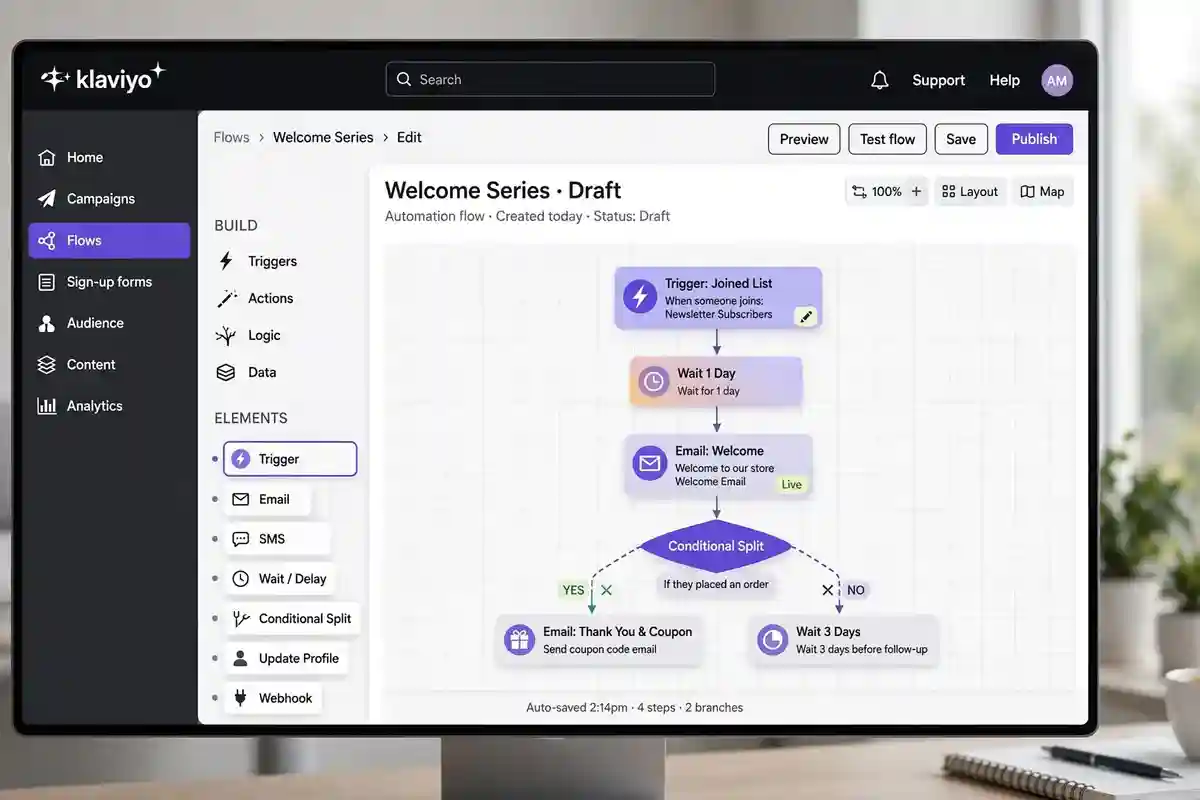
A strong ecommerce customer journey email marketing strategy is not one giant campaign. It is a set of smaller flows that respond to customer behavior.
Start by mapping the major actions a customer can take: signing up, browsing a product, adding to cart, buying, receiving the product, leaving a review, buying again, or going inactive. Each action should connect to a specific email or sequence.
Then give each flow one job. Do not try to educate, sell, re-engage, and cross-sell inside the same email. A welcome email should welcome. A cart email should recover the cart. A post-purchase email should support the purchase. Clear beats clever here.
Keep the tone and design consistent across every stage. The emails should have different goals, but they should still feel like they came from the same brand.
Measuring what matters
You cannot improve the email marketing customer journey if you only look at opens. Opens and clicks matter, but they do not tell the full story. The better question is whether each email moves the customer to the next stage.
Track different metrics depending on the stage:
-
Awareness emails: open rate and click-through rate.
-
Consideration emails: product page views, clicks to key pages, and time to purchase.
-
Decision emails: conversion rate and recovered revenue.
-
Post-purchase emails: review submissions, support reduction, and repeat engagement.
-
Retention emails: reorder rate, win-back rate, and customer lifetime value.
Testing helps too. Test subject lines, offers, content blocks, timing, and calls to action. Small improvements in clarity and timing can add up fast, especially in flows that run every day.
The goal is not to make the system complicated. The goal is to make every message more relevant.
Conclusion
Emails work better when they follow the customer journey instead of interrupting it. Awareness builds trust. Consideration removes doubt. Decision emails help customers buy. Post-purchase emails reduce regret. Retention emails bring people back.
When your ecommerce customer journey email marketing is built this way, every message has a purpose. That makes your emails more useful for customers and more valuable for the business.