Blog
Email marketing notes.
Email Marketing
How to Match Ecommerce Email Campaigns to the Customer Journey
Learn how to match ecommerce email campaigns to the customer journey so every send fits the customer journey.
By Peak Meadow Published July 10, 2026
The same email should not go to every customer.
That sounds obvious. Plenty of ecommerce brands still do it. They build one campaign, blast the whole list, and wonder why open rates sag, clicks look weak, and the unsubscribe rates creep up.
The problem usually is not the product. It is the match.
A new subscriber does not need the same message as someone who bought yesterday. A cart abandoner does not need the same message as a VIP customer who has ordered six times. A customer who has not clicked in 120 days should not be treated like someone who browsed your best-selling product this morning.
Good ecommerce email marketing starts by matching the send to the customer experience. Not the other way around.
Why campaign fit matters
A campaign is not just a box you check on the calendar. It is a message sent into a specific moment.
When the moment is right, the email feels useful. When the moment is wrong, the same email feels random, pushy, or lazy.
That is why customer journey mapping matters for ecommerce email. You are not trying to invent a complicated funnel. You are trying to answer a simple question: what does this customer need from us right now?
Once you know that, your campaign decisions get easier. The offer gets clearer. The angle gets sharper. The segment gets smaller, but usually better. And the email has a much better chance of driving revenue without burning trust.
The ecommerce email journey in plain English
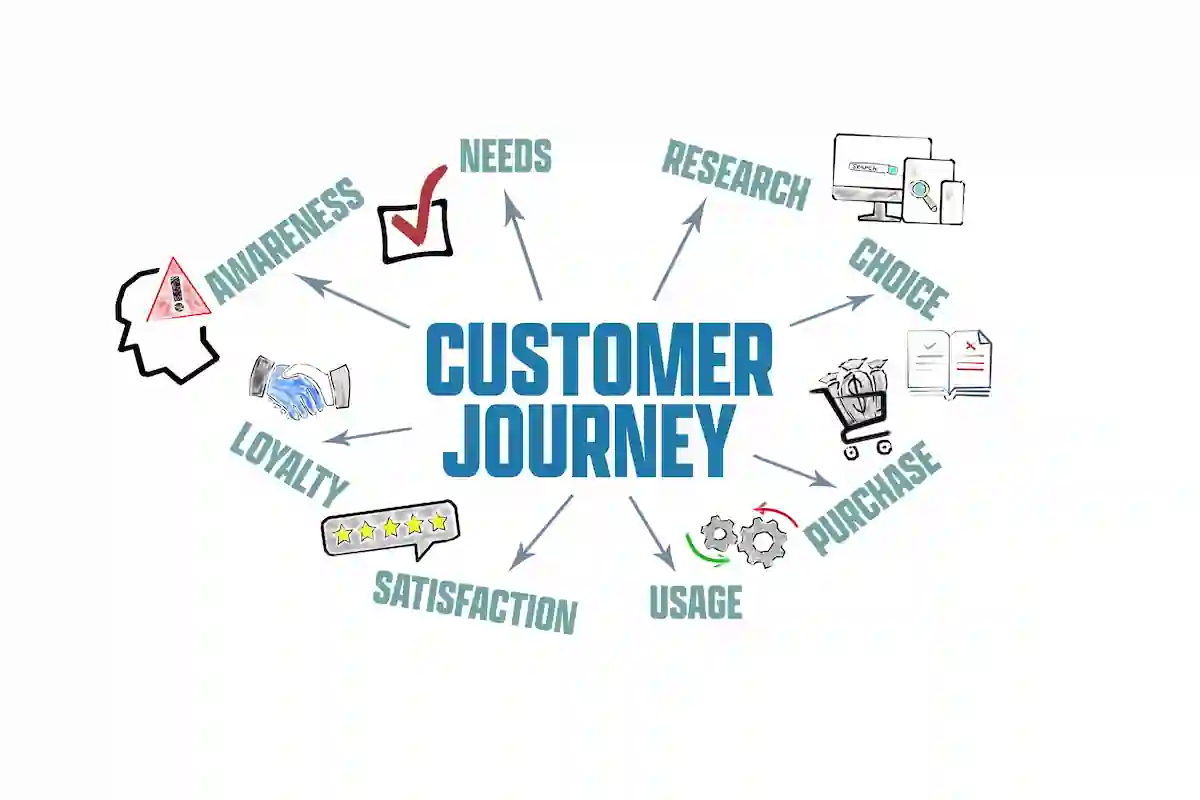
You can map the ecommerce customer journey a lot of ways, but this simple version is enough for most brands:
| Customer stage | What the customer is thinking | Best email type | Message angle |
|---|---|---|---|
| New subscriber | I am interested, but I do not fully trust you yet | Welcome campaign or welcome flow | Explain the brand, reduce risk, show best sellers, give a clear first step |
| Product browser | I might want this, but I am still comparing | Browse abandonment or educational campaign | Answer objections, show benefits, use reviews, make the next click easy |
| Cart abandoner | I was close, but something stopped me | Cart recovery email | Remind them what they left, address friction, add proof, clarify shipping or returns |
| First-time buyer | Did I make the right choice? | Post-purchase email | Confirm the purchase, set expectations, teach product use, build confidence |
| Repeat customer | I already know the brand. Show me what fits me | Cross-sell, replenishment, or loyalty campaign | Recommend based on past behavior, timing, category, and value |
| Dormant customer | I have not thought about this brand in a while | Winback campaign | Give a reason to come back, show what is new, or ask for preferences |
Start with the Customer Moment
Most weak campaigns start with the brand: “We need to send something this week.” Better campaigns start with the customer: “Who is in a buying moment right now, and what would help them take the next step?”
That one shift fixes a lot.
Instead of sending a generic sale email to the whole list, you can send a category-specific offer to people who browsed or bought that category before. Instead of pushing a discount to every new subscriber, you can use the first email to explain why your product is worth buying in the first place.
The customer moment tells you what kind of message belongs in the inbox.
Examples by customer moment
- New subscribers need trust before pressure
A new subscriber gave you permission to email them. That does not mean they are ready to buy immediately.
The first job is to make the brand feel safe and clear. Show your best sellers. Explain what makes the product different. Give them a reason to stay subscribed. If you offered a discount at signup, use it, but do not make the entire welcome series a coupon machine.
Strong message angle: “Here is where to start, why people buy from us, and what to expect next.”
- Browsers need clarity
A browser is interested, but not convinced yet. That customer may need sizing help, ingredient details, comparison points, reviews, or a clearer reason to choose your product over the other five tabs open on their phone.
This is where product education works better than yelling “buy now.”
Strong message angle: “Still looking? Here is what makes this product worth considering.”
- Cart abandoners need friction removed
Cart abandonment emails should not just say “you forgot something.” They should help the customer finish.
Maybe shipping was unclear. Maybe the price felt high. Maybe they wanted reviews. Maybe they got distracted. Your email should bring them back and remove the most likely objection.
Strong message angle: “Your cart is saved. Here is the product, the proof, and the easiest way back.”
- First-time buyers need reassurance
A first-time buyer is valuable because they have already crossed the hardest line. They trusted you once. Now your job is to make sure they feel good about it.
Post-purchase emails should reduce buyer’s remorse, explain what happens next, teach product use, and make support easy to find. This is not the best moment to hammer them with another discount five minutes after purchase.
Strong message angle: “You made a good choice. Here is how to get the most from it.”
- Repeat customers need relevance
Repeat customers should not get the same generic campaigns as everyone else. They have already told you what they care about through their purchases.
Use that information. If someone bought running socks, show them related gear. If someone buys skincare every 45 days, time the replenishment email around that window. If someone always buys sale items, treat them differently from a full-price VIP buyer.
Strong message angle: “Based on what you bought before, this is the next thing that makes sense.”
- Dormant customers need a real reason to return
A dormant customer does not need another generic newsletter. They need a reason to care again.
That reason might be a new product, a changed offer, a back-in-stock item, a seasonal need, or a simple preference update. If they still do not engage, stop chasing forever. Suppressing dead weight is part of healthy email marketing.
Strong message angle: “Here is what changed since you last bought from us.”
Campaigns and automations should work together
Automations handle predictable customer moments. Campaigns handle planned messages.
A welcome flow, abandoned cart flow, post-purchase flow, replenishment flow, and winback flow should run in the background. Those are lifecycle basics. Campaigns then layer on top for launches, promotions, seasonal pushes, education, and content.
The mistake is using campaigns to do the job an automation should already be doing. If every week you manually send a “come back and buy” email to recent browsers, you probably need a browse abandonment automation. If new subscribers only hear from you when a sale starts, your welcome flow is weak.
How to plan better ecommerce campaign sends
-
Pick the customer moment. New subscriber, browser, cart abandoner, first-time buyer, repeat customer, VIP, or dormant customer.
-
Choose one job for the email. Get the first purchase, recover the cart, educate, cross-sell, increase order value, win back, or collect feedback.
-
Build the segment around behavior. Use purchase history, browse behavior, engagement, category interest, average order value, and recency.
-
Match the message to the moment. Do not send a discount when the customer needs education. Do not send education when the customer is ready for a cart reminder.
-
Measure the right result. Opens matter less than clicks, conversions, revenue, unsubscribe rate, and long-term engagement.
Common mistakes to avoid
-
Sending every campaign to the full list
-
Using the same offer for everyone
-
Overusing discounts
-
Ignoring post-purchase email
-
Letting campaigns overlap with automations
-
Measuring only open rate
The bottom line
Better ecommerce email campaigns are not always more creative. Most of the time, they are better matched.
Send the right message to the right customer moment. That is the whole game.
When your campaigns line up with the customer journey, your emails feel less like noise and more like help. That is how you get more clicks, more sales, and a list that does not get tired of hearing from you.