Blog
Email marketing notes.
Email Marketing
How to Build an Ecommerce Email List
Build an ecommerce email list with the right platform, signup offer, capture points, permission practices, and welcome flow.
By Peak Meadow Published July 8, 2026
Building an ecommerce email list is not about collecting as many addresses as possible. It is about building a list of people who actually want to hear from your store, understand your offer, and are likely to buy when the timing is right.
A good list gives you a direct line to shoppers who have already shown interest. They visited your site. They clicked a product. They joined for a discount. They bought once and may buy again. That is different from chasing cold traffic every week.
The setup is not complicated; however, it does need structure. For most ecommerce brands, the foundation comes down to five pieces: the right email platform, a clear signup offer, visible capture points, clean permission practices, and a welcome flow that turns attention into action.
Start with the right email platform
Your email platform matters because it connects your store data to your email strategy. You do not need the fanciest tool on day one, but you do need a platform that works well with ecommerce.
Look for a platform that can connect with your store, track purchases, build customer segments, send automations, and report revenue from email. If it cannot tell you which emails helped drive purchases, you will end up guessing.
For a Shopify store, tools like Klaviyo and Omnisend are common choices. For smaller brands, Mailchimp or Brevo can work as a starting point. For stores with more complex automation needs, ActiveCampaign or Drip may make sense. The specific tool matters less than whether it fits your store, budget, and team.
Do not pick a platform only because it has the longest feature list. Pick the one you will actually use.
Create a signup offer people actually want
Most shoppers will not hand over their email address just because you ask nicely. They need a reason. That reason is your signup offer.
For ecommerce, the most common offer is a first-order discount. It works because it is simple. But it is not the only option. Depending on your product, a better offer might be free shipping, early access, a product quiz, a sizing guide, a routine builder, a buying guide, or loyalty points.
The best signup offer does three things:
-
It gives the shopper a clear reason to subscribe.
-
It connects naturally to your product.
-
It makes the next step easier.
A skincare brand might use a routine quiz. A clothing brand might use a fit guide. A coffee brand might offer a brewing guide. A pet brand might ask about pet type and recommend the right product category. These offers do more than collect emails. They help you understand the customer.
A generic “join our newsletter” box is weak. A specific offer tied to the customer’s problem is much better.
Add signup points across your store
Once you have the offer, put it where people can see it. Many stores make the mistake of hiding email capture in the footer and expecting it to work. It usually will not.
Start with the main places where signup makes sense:
-
Homepage popup or slide-in
-
Footer signup form
-
Product page signup module
-
Blog post call to action
-
Checkout opt-in
-
Thank-you page signup or loyalty invite
-
Dedicated landing page for the offer
Each signup point should be simple. Ask for the email address first. Add one extra field only if it clearly improves the experience. For example, a clothing brand may ask for preferred category. A pet brand may ask whether the shopper has a dog or cat. A skincare brand may ask about skin concern.
Do not turn the form into a survey. Every extra field creates friction. The more friction we create, the less people will finish the form. Collect the minimum useful information now to start off and then gather more later through quizzes, preference centers, email clicks, and purchase behavior.
Use popups without annoying people
Popups work, but bad popups damage the experience. The goal is to make the offer visible without making the site feel desperate.
A few simple rules help:
-
Do not show the popup the second someone lands on the page.
-
Give visitors a few seconds to understand the site first.
-
Use exit-intent popups for shoppers who are about to leave.
-
Suppress popups for people who already subscribed.
-
Make the close button easy to find.
-
Test one change at a time. A few things you can change are the offer, timing, headline, or design.
A popup should feel like a helpful offer, not a trap. If it blocks the page, repeats constantly, or makes mobile browsing painful, it will cost you trust.
Keep permission and deliverability clean
A list is only valuable if people gave you permission to email them and your messages can actually reach the inbox. That means list quality matters more than list size.
Do not buy email lists. It is one of the fastest ways to hurt deliverability, attract spam complaints, and fill your account with people who never wanted to hear from you.
Use clear signup language. Tell people what they are getting. Include an unsubscribe link in every email. Use accurate sender information. Follow the rules that apply to where you sell, including laws like CAN-SPAM, GDPR, CASL, and other privacy requirements if they apply to your audience. If you have not heard of these laws before or are unfamiliar with them then you’ll need to brush up on them. CAN-SPAM and GDPR can involve heavy fines if not followed properly.
You should also clean your list over time. One thing that you should always be doing is removing hard bounces. Another, watching for subscribers who never open or click. Try a re-engagement email before removing them, but do not keep emailing dead contacts forever. Remember, a smaller but engaged list beats a large, unengaged one every time.
Build a welcome flow before chasing more subscribers
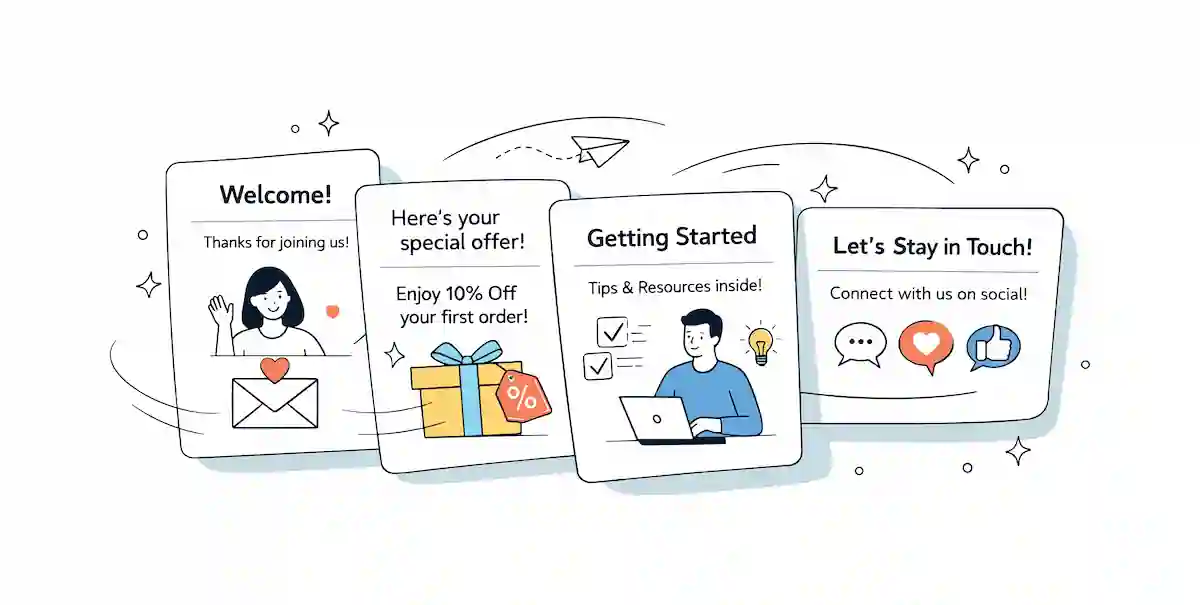
Getting the signup is not the finish line. It is the handoff. Once someone joins, your next job is to turn that interest into a first purchase.
At minimum, build a short welcome flow:
-
Email 1: Deliver the offer or lead magnet immediately.
-
Email 2: Explain what your brand sells and why it is different.
-
Email 3: Show best sellers or recommended products.
-
Email 4: Handle common objections like sizing, shipping, returns, ingredients, or quality.
-
Email 5: Give a clear next step, such as using the discount before it expires or choosing a recommended product.
This does not need to be complicated. It needs to be useful. New subscribers are paying attention. Do not waste that moment with one bland coupon email and nothing else.
Track the right numbers
Once your capture system is live, measure whether it’s working. Do not only look at list size. A growing list is not helpful if the subscribers never engage or buy.
Track these basics:
-
Signup conversion rate
-
Source of subscribers
-
Welcome flow open and click rates
-
First-purchase rate from new subscribers
-
Revenue from the welcome flow
-
Unsubscribe and spam complaint rates
-
Engagement by signup source
The most useful question is simple: which signup sources bring in people who actually become customers? That is where you should spend more time.
Common mistakes to avoid
-
Using a generic newsletter signup with no clear value.
-
Asking for too much information too early.
-
Buying email lists.
-
Showing aggressive popups on every page view.
-
Collecting subscribers without a welcome flow.
-
Measuring list growth but ignoring subscriber quality.
Final takeaway
A strong ecommerce email list starts with a simple system. It can be a useful offer, clear signup points, clean permission, or a welcome flow that gives new subscribers a reason to buy.
Start with quality. Get the basics working. Then grow. That order matters. A messy list built fast will create more work later. A clean list built with intent can become one of the most valuable assets in your ecommerce business.